Does CarPlay Work With Any Car?
The honest answer on which cars support CarPlay, which ones never will, and how to add it to almost anything.


Key takeaways
- CarPlay is not built into every car; it depends on the head unit, not the brand.
- Most cars from 2016 onward include it, and many from 2014-2015 do too.
- Older cars can get CarPlay through an aftermarket head unit or a wired-to-wireless setup.
- Your iPhone needs to be a model 5 or newer running a recent iOS version.
- A few base-trim and fleet vehicles ship without it even in newer model years.
You just picked up a used sedan, plugged in your iPhone expecting your maps and podcasts to pop up on the dash, and got nothing. Just a stock radio staring back at you. So what gives?
This is one of the most common questions I hear from friends who are car shopping. They assume the feature rides along with the phone, like Bluetooth used to. It does not work that way.
Whether your car shows that familiar interface depends almost entirely on the screen bolted into your dashboard, not on Apple and not on your phone. Let me walk you through which cars have it, which ones flat out do not, and what you can do about it if yours came up short.
It Lives in the Car’s Head Unit, Not the Badge
Here is the part that trips people up. The feature is a piece of software that runs on your car’s infotainment screen, the unit installers call the head unit. Your iPhone talks to that screen and mirrors a simplified version of a few apps onto it.
So a $70,000 luxury car from 2013 might not have it, while a stripped-down economy hatchback from 2019 does. The price tag and the badge tell you almost nothing. What matters is the year, the trim, and whether the manufacturer licensed the software for that specific screen.
I once had a customer bring in a loaded pickup convinced it must have the feature because of everything else it came with. It did not. The truck was a 2014 built before the automaker added support. Meanwhile his teenager’s cheap commuter car had it standard.
Good to know
Apple keeps a running list of every model that supports the feature from the factory. If you want to confirm your exact car, check the official CarPlay availability page before you buy or start shopping for an adapter.
Which Model Years Actually Have It
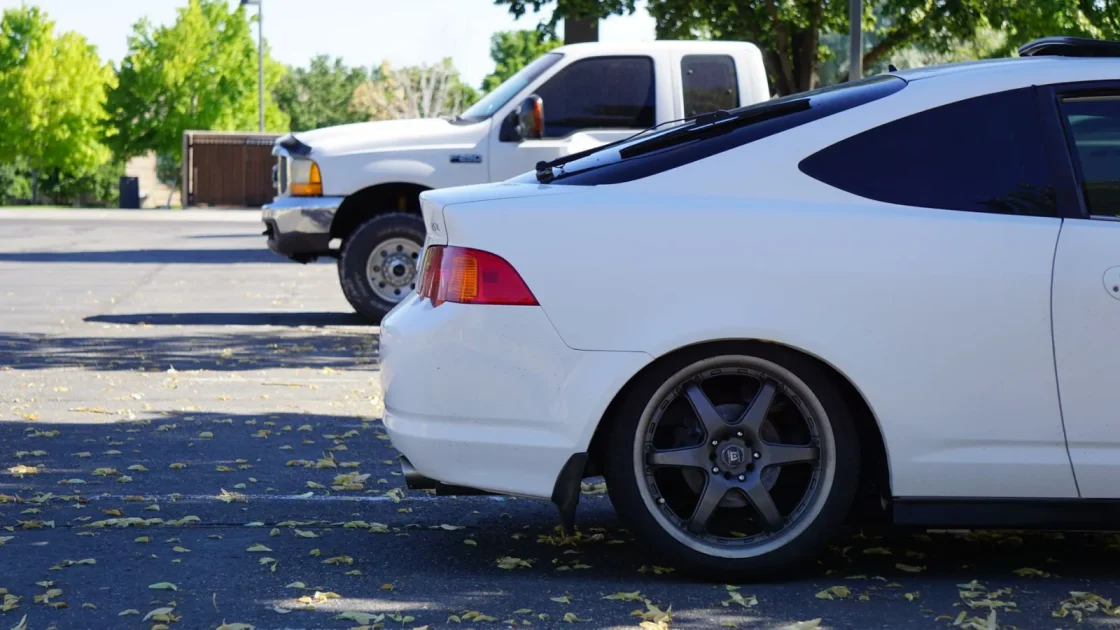
The rollout happened gradually, so the year of your car is the fastest way to gauge your odds.
| Model year range | How likely CarPlay is included |
|---|---|
| 2010-2013 | Almost never from the factory |
| 2014-2015 | Rare, and usually only top trims of a few brands |
| 2016-2018 | Common on mid and upper trims, sometimes optional |
| 2019-2021 | Standard on most new cars, often wireless |
| 2022 and newer | Nearly universal, with a handful of exceptions |
Those are averages across the whole market. A brand like Hyundai or Honda added it early and widely. A few holdouts, most famously Tesla, still do not offer it at all and likely never will because they build their own system instead.
If your car sits in that 2014 to 2017 window, do not assume. Two cars of the same model and year can differ based on trim and options. The base version might have a small non-touch screen while the upgrade package brought the bigger unit with support baked in.
The Cars That Skip It Even When They Are New
A newer car is not an automatic yes. A few categories still ship without it.
- Base-trim work trucks and fleet vehicles built to a price often keep a bare-bones radio
- Certain European models tie it to an optional tech package you had to pay extra for
- Tesla and a few EV startups run closed systems with no third-party support
- Some rental-fleet cars are ordered with the feature deleted to cut cost
- A handful of older luxury cars have proprietary screens the automaker never updated
The fleet angle catches people off guard on the used market. A car that came from a rental company or a corporate lease may have been spec’d without the feature even though the retail version of the same car had it standard.
Watch out
Do not trust a listing that just says “touchscreen” or “backup camera.” Those do not mean CarPlay is present. Ask the seller to plug in an iPhone and show you the icon appear, or check the VIN against the build sheet.
Your Phone Matters Too, Just Less Than You Think
The car does most of the heavy lifting, but your iPhone still needs to clear a low bar. Any iPhone 5 or newer works, which by now covers basically every phone still in use. You also want a reasonably current version of iOS, since Apple ships fixes and new features through those updates.
The other variable is wired versus wireless. Older cars with support need a physical Lightning or USB cable. Newer ones, roughly 2019 and up, often connect over Wi-Fi and Bluetooth so the phone can stay in your pocket.
If you have an Android phone, none of this applies to you. You would be looking at the equivalent Google system instead, which follows the same car-by-car pattern. I get into how the two stack up in our comparison pieces, so I will keep this focused on the Apple side.
Pro tip
If your wireless connection keeps dropping, try a known-good cable first. A surprising number of “wireless CarPlay is broken” complaints turn out to be a frayed charging cord being used as a fallback. A quality USB-A to Lightning cable runs about $15 and rules out half the problem.
Your Old Car Is Not Out of Luck
Say you checked and your car does not have it. Maybe it is a beloved 2011 wagon you have no intention of trading in. You still have three real paths, and they range from cheap to involved.
Replace the head unit
You can pull the factory radio and drop in an aftermarket unit from a brand like Pioneer, Kenwood, or Sony that has the feature built in. Prices run roughly $200 to $600 for the unit, plus a dash kit and wiring harness, and often $100 to $200 for installation if you do not do it yourself. This is the cleanest look because it lives in the dash where the old radio was.
Add a portable screen
If you do not want to tear apart your dash, a portable screen mounts to your windshield or vent and connects to your phone. These run about $80 to $250. They are not as tidy, but they get you the interface in an afternoon with zero wiring.
Use an adapter (only if you already have wired CarPlay)
This one is narrow. If your car already has wired support and you just want it to go wireless, a small dongle does that for $50 to $120. It does nothing for a car with no support at all, so do not buy one hoping it adds the feature from scratch.
I cover the tradeoffs between those three routes in detail elsewhere, including which makes sense for which budget. The short version: match the solution to how much dash surgery you are willing to tolerate.
The best upgrade is the one you will actually use. A $90 portable screen you mount today beats a $500 head unit that sits in a box because the install intimidated you.
How to Check Your Specific Car in Five Minutes
Before you spend a dime, confirm what you are working with. Here is the routine I run.
First, look at the model year and pull up Apple’s supported-vehicle list. Second, if the car is in the maybe range, grab an iPhone and plug it into the USB port with a good cable. Third, watch the screen for the icon or an on-screen prompt asking to trust the phone.
If nothing happens after a solid minute, try a second cable and a different USB port, since some ports are charge-only. Still nothing? Then your car almost certainly lacks factory support, and you are looking at one of the add-on routes above.
Quick note
A dealer salesperson will sometimes say “yeah it has all that” without actually knowing. Trust the plug-in test over anyone’s word. Thirty seconds with a cable settles it for good.
Where That Leaves You
No, CarPlay does not work with any car straight out of the box. It works with cars whose head unit was built to support it, which today means most vehicles from about 2016 on and a growing slice of the years before that.
If your car has it, plug in and enjoy. If it does not, you are one modest purchase away from getting it, whether that is a new head unit, a portable screen, or a wireless adapter for a car that is already halfway there.
Your next step is simple. Run the five-minute plug-in test on your own car this week. Once you know exactly where you stand, you can decide whether to leave it alone or pick the upgrade path that fits your car and your wallet.
Frequently asked questions
Yes. Even if your car shipped with no support at all, you can install an aftermarket head unit that includes it, or use a portable screen that connects to your phone. Wireless adapters are the exception, since those only work on cars that already have wired CarPlay.
Not really. It depends on the specific head unit, model year, and trim rather than the badge. Two cars of the same brand can differ, and a cheap car may have it while an older luxury car does not. Tesla is the notable brand that skips it entirely.
Any iPhone 5 or newer supports it, so nearly every phone in use today qualifies. Keep your iOS reasonably up to date for the best experience. Wireless connection also needs a car built for it, usually a 2019 or newer model.
Bring your own iPhone and a good cable, plug into the car's USB port, and watch for the icon or a trust prompt on the screen. Do not rely on a listing saying it has a touchscreen, since that alone does not confirm support. The plug-in test takes under a minute.
No. An adapter only converts existing wired CarPlay into a wireless connection. If your car has no factory support, the adapter will do nothing, and you would need a new head unit or a portable screen instead.
Keep reading
Related guides
CarPlay vs a Phone Mount: Which Is Smarter?
A $20 phone mount or a full CarPlay setup? Here is how to pick the one that actually fits your car, your budget, and your daily drive.
Read guide
Android Auto Coolwalk Dashboard, Explained
What the Coolwalk redesign changed on your car screen, why it looks different, and how to set it up so it actually works for you.
Read guide
Is CarPlay Worth It? An Honest Look
A straight answer on who gets real value from CarPlay, who barely notices it, and how to decide before you spend a dime.
Read guide